
Eddy Current Testing (ECT) is used across a remarkably diverse range of industries to detect discontinuities, evaluate material properties, and assess component integrity.
From nuclear steam generators and aircraft structures to automotive components and medical-device manufacturing, ECT offers fast, sensitive, and often noncontact inspection capabilities.
However, inspection techniques, equipment configurations, applicable standards, and limitations vary significantly between industries. Understanding these differences is essential for selecting an appropriate inspection method and obtaining reliable results.

Eddy Current Testing plays a critical role in nuclear power plant inspection programs, particularly for steam generator tubing and balance-of-plant heat exchangers.
Typical Applications
Steam generator tubing
Condensers and feedwater heaters
Other heat exchanger tubing
Selected surface and component inspections

Eddy Current Testing is widely used throughout the aerospace industry to detect fatigue cracking, corrosion, and other material discontinuities in aircraft structures, engines, and critical components.
Typical Applications
Eddy Current Testing is used throughout the maritime industry to evaluate the condition of shipboard heat exchangers, condensers, propulsion components, and other critical equipment. Electromagnetic inspection techniques help identify corrosion, cracking, wear, and material degradation without unnecessarily dismantling equipment.
Typical Applications
Eddy Current Testing is widely used in automotive manufacturing for high-speed, automated inspection of metallic components. Applications include crack detection, material sorting, heat-treatment verification, and dimensional or material-property evaluation.
Typical Applications
Eddy Current Testing and related electromagnetic inspection techniques are widely used in petrochemical facilities to assess the condition of heat exchanger tubing, process equipment, and selected metallic components. These inspections help identify corrosion, cracking, wear, and wall loss that can affect equipment reliability and plant safety.
Typical Applications
Eddy Current Testing is used in the rail transportation industry to detect surface and near-surface discontinuities in rails, wheels, axles, and other critical components. Both portable and automated inspection systems help identify fatigue-related damage, manufacturing defects, and material variations that can affect railway safety and reliability.
Typical Applications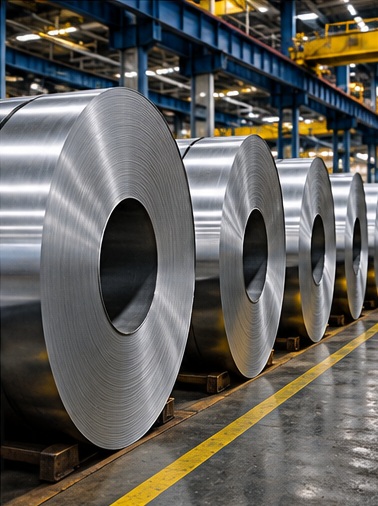
Eddy Current Testing is extensively used in metals production and manufacturing for automated inspection, material characterization, and quality control. ECT systems can inspect tubing, wire, bar stock, and other metallic products at high production speeds while detecting discontinuities and evaluating variations in material properties.
Typical Applications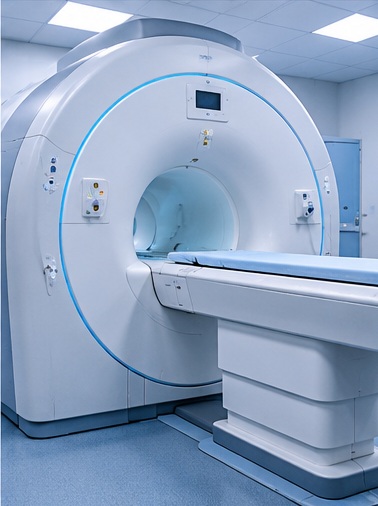
Eddy Current Testing is used in specialized medical-device manufacturing and precision metal inspection applications. It can help detect surface and near-surface discontinuities, verify material properties, and support quality control of conductive components used in medical equipment and devices.
Typical Applications